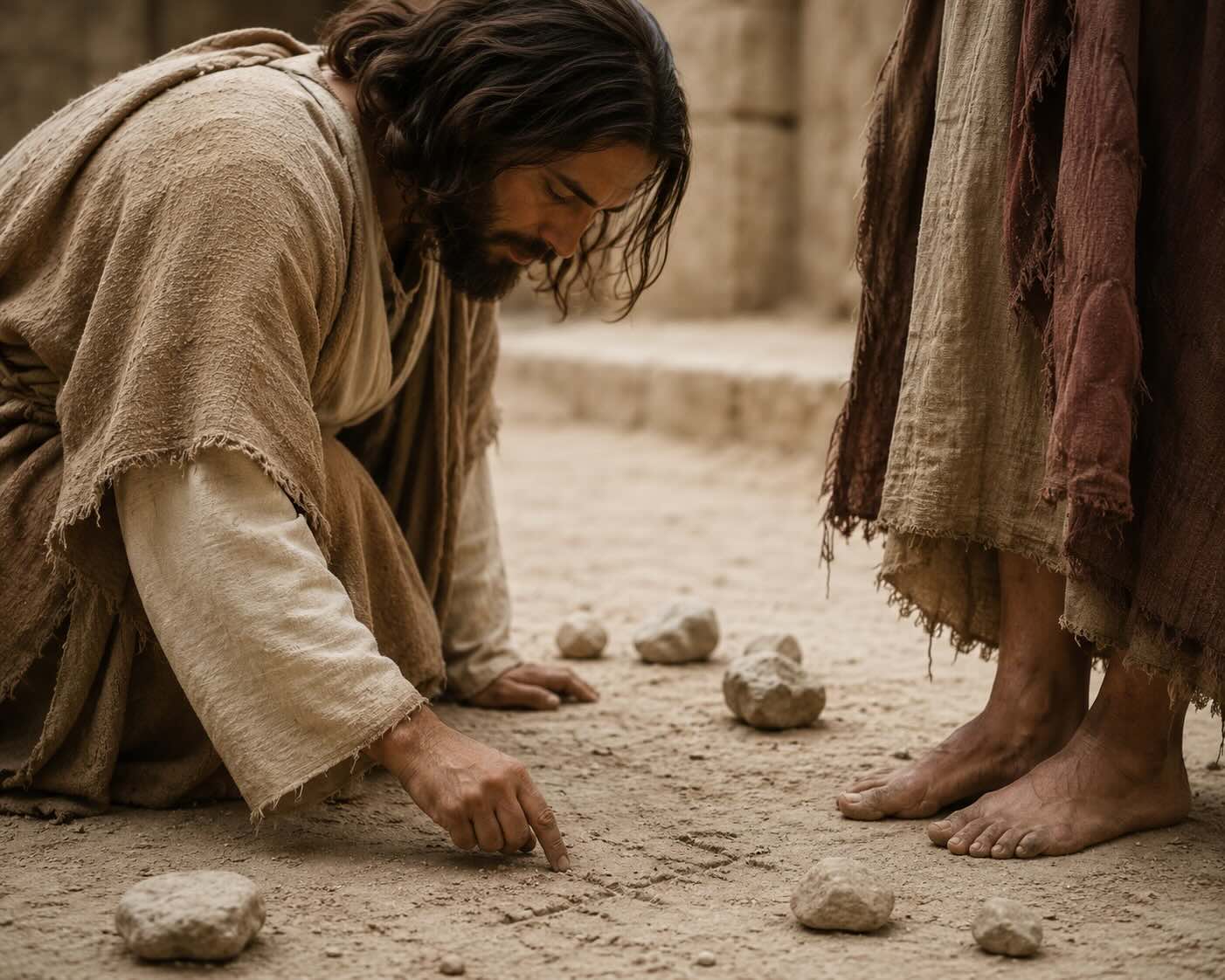
The woman had been caught in the act of adultery red-handed. They dragged her out to kill her for her deeds as there was no question. The man was nowhere to be seen and nowhere to be held to account. But the woman? Death! Death! Death!
There is something quite surprising that is so easily missed. But let’s first go to the story:
“but Jesus went to the Mount of Olives.Early in the morning he came again to the temple. All the people came to him, and he sat down and taught them. The scribes and the Pharisees brought a woman who had been caught in adultery, and placing her in the midst they said to him, “Teacher, this woman has been caught in the act of adultery.
Now in the Law, Moses commanded us to stone such women. So what do you say?” This they said to test him, that they might have some charge to bring against him. Jesus bent down and wrote with his finger on the ground.
And as they continued to ask him, he stood up and said to them, “Let him who is without sin among you be the first to throw a stone at her.”
And once more he bent down and wrote on the ground. But when they heard it, they went away one by one, beginning with the older ones, and Jesus was left alone with the woman standing before him.
Jesus stood up and said to her, “Woman, where are they? Has no one condemned you?”
She said, “No one, Lord.”
And Jesus said, “Neither do I condemn you; go, and from now on sin no more.”
What would have happened if Jesus had forgiven the women, and then told the men to drop their stones. If he would have had the earthly authority to make the men do so, they might have complied. But outwardly, not in their hearts.
The beautiful thing in this story is the very first thing he did was to confront them about their own sin. It wasn’t just about them, though. He was providing a space socially for the woman.
If the men had just dropped their stones and moved on without dealing with their own sin, then they would have channeled their hatred of her in other ways — slander, malicious words, and perhaps violence at a later time. The social hatred would have been terrible.
But Jesus took the time to restore her not just from her sin, but also before people. He did this by leveling the playing ground. He did this by confronting then with their own sin.
Jesus cares not just for the forgiveness of our sins, but also our healing before others as well. We see this all over the Bible:
- “For if you forgive others their trespasses, your heavenly Father will also forgive you, but if you do not forgive others their trespasses, neither will your Father forgive your trespasses” (Mt 6:14-15).
- The Parable of the Unforgiving Servant in Matthew 18:21–35
- “so you should rather turn to forgive and comfort him, or he may be overwhelmed by excessive sorrow. So I beg you to reaffirm your love for him” (2 Cor 2:6-8).
Repentance is not just about being reconciled to God, it is about being restored relationally to men. This is God’s heart. This is the cry of the Christian.
Our social relationships matter too. And in his tender moment, Jesus made it possible for her to have a way back.