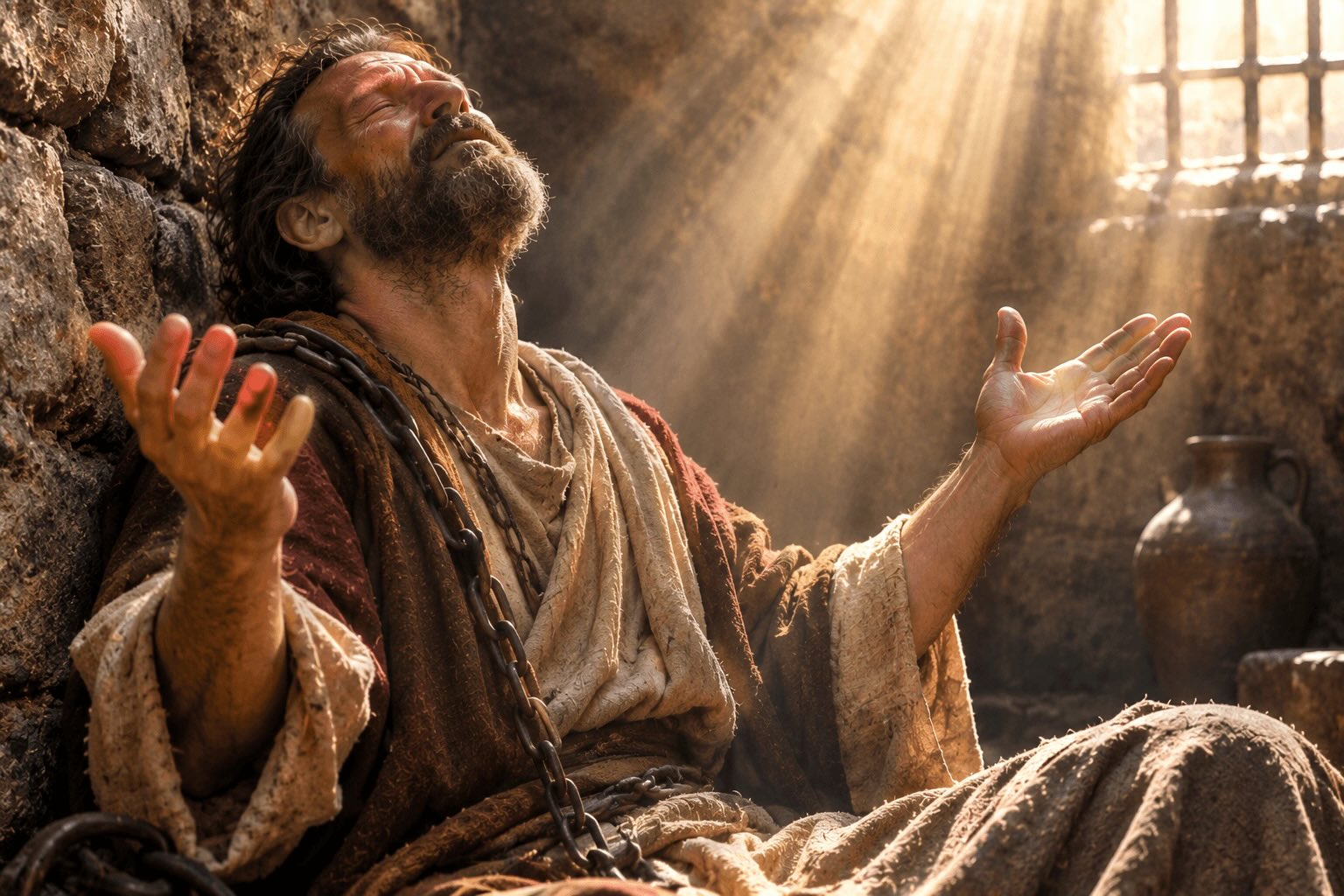
Oftentimes we get so caught up in wondering what the “thorn in the flesh” for Paul was that we miss the point – Our troubles, trials, weaknesses, problems, and insufficiencies are fertile ground for God’s power. Paul even says because of this, he delights in the challenges and sufferings of life. ??
He delights? In suffering?
That is contrary to our way of thinking. Every one of our prayers is typically about God saving us from our suffering and heartache and troubles. We cry and plead. And while Paul doesn’t necessarily stop praying for deliverance, he is also able to be grateful for his hardships.
Let’s look at the context. First and foremost, Paul had a glorious encounter with God in which he was taken into paradise. Whether that was in the body or out of the body, he doesn’t know.
“I must go on boasting. Though there is nothing to be gained by it, I will go on to visions and revelations of the Lord. I know a man in Christ who fourteen years ago was caught up to the third heaven—whether in the body or out of the body I do not know, God knows. And I know that this man was caught up into paradise—whether in the body or out of the body I do not know, God knows— and he heard things that cannot be told, which man may not utter. On behalf of this man I will boast, but on my own behalf I will not boast, except of my weaknesses— though if I should wish to boast, I would not be a fool, for I would be speaking the truth; but I refrain from it, so that no one may think more of me than he sees in me or hears from me” (2 Cor 12:1-6).
The Lord gave Paul a supernatural encounter that he would never forget. It was so extraordinary, and something so special, that the Lord also needed to give him something to keep him humble. It was what has become the proverbial “thorn in his flesh.”
“So to keep me from becoming conceited because of the surpassing greatness of the revelations, a thorn was given me in the flesh, a messenger of Satan to harass me, to keep me from becoming conceited” (2 Cor 12:7).
What was the Thorn in Paul’s Flesh?
Some say it was his eye ailment he mentions in Galatians. Lexical scholars make a strong case that it was false teachers. The point is that the thorn isn’t the point. It’s how God protected Paul from becoming arrogant because of the vision, and so ruin his work and ministry.
Three times Paul asked for this issue to be removed. It must have been severe.
“Three times I pleaded with the Lord about this, that it should leave me. But he said to me, “My grace is sufficient for you, for my power is made perfect in weakness.”
This is what mattered. That God’s grace was sufficient for him.
The Result of Paul’s Suffering
The suffering from the thorn was redemptive. God’s power was made manifest.
Therefore I will boast all the more gladly of my weaknesses, so that the power of Christ may rest upon me. For the sake of Christ, then, I am content with weaknesses, insults, hardships, persecutions, and calamities. For when I am weak, then I am strong” (2 Cor 12:1-6).
The ESV here says “content” with weaknesses. But the word has a stronger connotation of “delight.” It is the same word that the Father uses of the Son in his baptism: “And a voice came from heaven: “You are my Son, whom I love; with you I am well pleased” (Luke 3:22). It’s a relational word for pleasure of one person towards another.
It’s life-changing to think this way. It’s not that we don’t pray for help and prayer and deliverance as we see this in Scripture, even from Jesus in Gethsemane, it’s that we can find redemption in our pain. God is often more present, felt more closely, and somehow in ways that we don’t understand manifests his power in our weakness.
What does his power look like?
He doesn’t spell it out. Only that it is, and that this is what he does. Perhaps it’s because when we are weak, He can move, as we are not in the way. Because of this, He will get the glory rightly due his name.