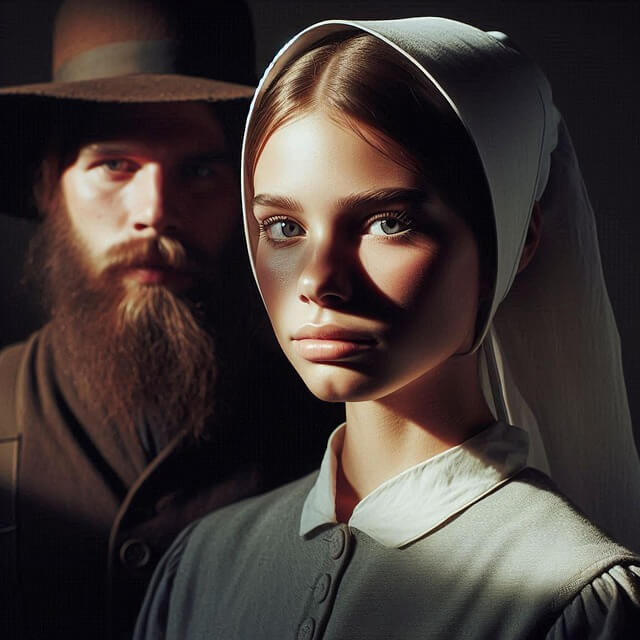
Should women veil? The question of concern is based on this Scripture:
I praise you for remembering me in everything and for holding to the traditions just as I passed them on to you. 3 But I want you to realize that the head of every man is Christ, and the head of the woman is man,and the head of Christ is God. 4 Every man who prays or prophesies with his head covered dishonors his head. 5 But every woman who prays or prophesies with her head uncovered dishonors her head—it is the same as having her head shaved. 6 For if a woman does not cover her head, she might as well have her hair cut off; but if it is a disgrace for a woman to have her hair cut off or her head shaved, then she should cover her head.
7 A man ought not to cover his head, since he is the image and glory of God; but woman is the glory of man. 8 For man did not come from woman, but woman from man; 9 neither was man created for woman, but woman for man. 10 It is for this reason that a woman ought to have authority over her own head, because of the angels. 11 Nevertheless, in the Lord woman is not independent of man, nor is man independent of woman. 12 For as woman came from man, so also man is born of woman. But everything comes from God.
13 Judge for yourselves: Is it proper for a woman to pray to God with her head uncovered? 14 Does not the very nature of things teach you that if a man has long hair, it is a disgrace to him, 15 but that if a woman has long hair, it is her glory? For long hair is given to her as a covering. 16 If anyone wants to be contentious about this, we have no other practice—nor do the churches of God.
The root of this question is whether this Scripture here is permanent? Or was it for the times and the culture?
1) The justification that this is permanent
There are several reasons why it could be interpreted that this was an ongoing, long-standing command for all time. Consider the following:
- Paul makes his appeal to the order of creation (v, 7-9, 14-16)
- Paul appeals to “all the churches” (v. 16)
- There is an angelic element to it (v. 10)
By just looking at these, it would be reasonable to believe that this is a permanent practice. Could it also, though, be cultural? Like the admonition to “greet one another with a holy kiss”?
The downsides of this argument is that head coverings have been cultural for thousands of years. Sometimes they have been as a sign of a married woman, other times a sign of modesty, and more.
The challenge is that there is a notation in the text about the nature of hair. Long and short hair are another cultural variable. Some have even gone on to say that this text is about hair. So could it be principle based and temporal?
2) The justification that this is temporal and cultural
The underlying foundation is modesty, propriety in worship, and gender distinction.
- Propriety in worship
- Honoring of headship
- Show cultural respect and not looseness or immorality
- Paul mentions their adherence to the traditions (v. 1)
But what was the cultural norm of the time?
Plutarch (46-119 AD) gives us a clue
“Or is it that the unusual is proper in mourning, and it is more usual for women to go forth in public with their heads covered and men with their heads uncovered? … But formerly women were not allowed to cover the head at all” (Plutarch, The Roman and Greek Questions 14).
It seems like even here we see there was a shift of cultural of where it was once inappropriate to even wear a head covering, and then it changed. Culture is always changing.
At the very least, the root principle is honor/shame culture which we see in Corinth, and being honorable before God and others, but also sexual propriety and modesty in worship and in life. Principles such as these are timeless.
We have then two questions.
1) Is it timeless? And therefore head coverings should be for all times?
2) Is it for principles of modesty and honorable living? And the principle is there with cultural expressions as variable?
Another layer to answer this question is to go into the historical background. Clearly sexual liberties and unrestrained behavior were rampant. We see this from the Scriptures:
- Vile sexual immorality was widespread, and had even become worse in the church (1 Cor 5:1)
- Prostitution was frequent and normalized (1 Cor 6:16). People came from all over for the prostitutes at the temple of Aphrodite (Strabo said there were 1000+ prostitutes at the temple)
- Paul had to directly command them to flee from sexual immorality (1 Cor 6:18)
The unrestrained sexual liberties was so bad that in ancient culture “to be Corinthianized” was a euphemism for someone who lives in sexual excess (Strabo, Aristphones, Hesychius of Alexandria).
- Wealth → indulgence
- Status → public display
- Freedom → moral looseness
This explains issues like:
- Showing off during communion (1 Cor. 11)
- Lawsuits between believers (1 Cor. 6)
- Pride and division (1 Cor. 1–3)
Sin was just normalized. So much so that Paul had to combat the notion of “All things are lawful for me” (1 Cor. 6:12).
Putting it all together, what we see here is Paul confronting sexual ethics. Shameful activities had been normalized. This was disgusting both before heaven and earth. Paul was calling them to live in such a way that there was honorable dress and behavior before God, angels, and man. In this case, it meant head covering.
Either way, there is evidence to support both the universal view and temporal view. Where do I land? Gently into the temporal camp. Why?
1) Symbols change. Principles do not.
The principle is honor, sexual propriety, and gender respect. How that is shown changes through time and within culture.
For example, one time I was deep in the jungle as we went to go meet with a tribe. We spent the night in the village and began to talk to them. A part of their clothing was that their elbows of the women were all covered. Why? Because elbows were seen as sensual, sexual enticement.
Now in the country I am in, it is not common for men to stumble in their lust for women because of elbows. There’s rarely locker room banter over the allure of someone’s elbow. But in this tribe, it was different.
If the symbol came as a univiersal, that the women needed to cover their head, but they did not need to cover their elbows, this would be a problem for the men of that tribe. The sexual stumbling block of exposed elbows would be a temptation.
But if the principle remains – sexual propriety, honorable dress, and gender respect, then what would be more important is to encourage them to practice in an honorable way – covering their elbows.
We see this historically as well. We see the quote in Plutarch where culture shifted.
2) Paul uses cultural descriptors as well
Paul appeals to church practice and custom (v. 16). Notice he isn’t referencing law here. He also speaks of hair length.
Although it is worthy to note on the opposite side he does appeal to creation and angels.
Could a case be made that this is universal? Yes. Could it be temporal with universal application of principles? Yes.
It’s why it can be controversial. But most see this as principles with application of modesty, propriety, and gender respect.