

The next discussion in the Allie Beth Stuckey debate on homosexuality with a young man names is about about the Greek words. The first word discussed is ἀρσενοκοῖται (arsenokoitai) found in 1 Cor 6:9.
“Do not be deceived: neither the sexually immoral, nor idolaters, nor adulterers, nor men who practice homosexuality, nor thieves, nor the greedy, nor drunkards, nor revilers, nor swindlers will inherit the kingdom of God” (1 Cor 6:9).
Let’s look at the first word in this post: Arsenkoitai – Homosexual
The person debating Ally said that this word is
A) Used originally for economic exploitation
B) The word “homosexuality” was never used prior to the 1860’s. And she adds that it wasn’t added to Scripture until 1946.
Let’s first look at the word as it is very unique The Greek word is made off of 2 other Greek words:
-
ἄρσην (arsēn) = male
-
κοίτη (koitē) = bed, lying, sexual intercourse
Paul here appears to be making a new compound word based off the Septuigint which is the Greek translation of the Old Testament. Let’s look at Greek 18:22 from which Paul is forming this word.
καὶ μετὰ ἄρσενος οὐ κοιμηθήσῃ κοίτην γυναικός· βδέλυγμα γάρ ἐστιν.
kai meta arsenos ou koimēthēsē koitēn gynaikos; bdelygma gar estin.
“And with a male you shall not lie as with a woman; for it is an abomination.”
The Septuigint was translated a couple of hundred years prior to Paul and would have been familiar with his audience. Him using it as a basis would easily be understood by his hearers. Furthermore, it isn’t the first time Paul has made a new compound word. Consider the following.
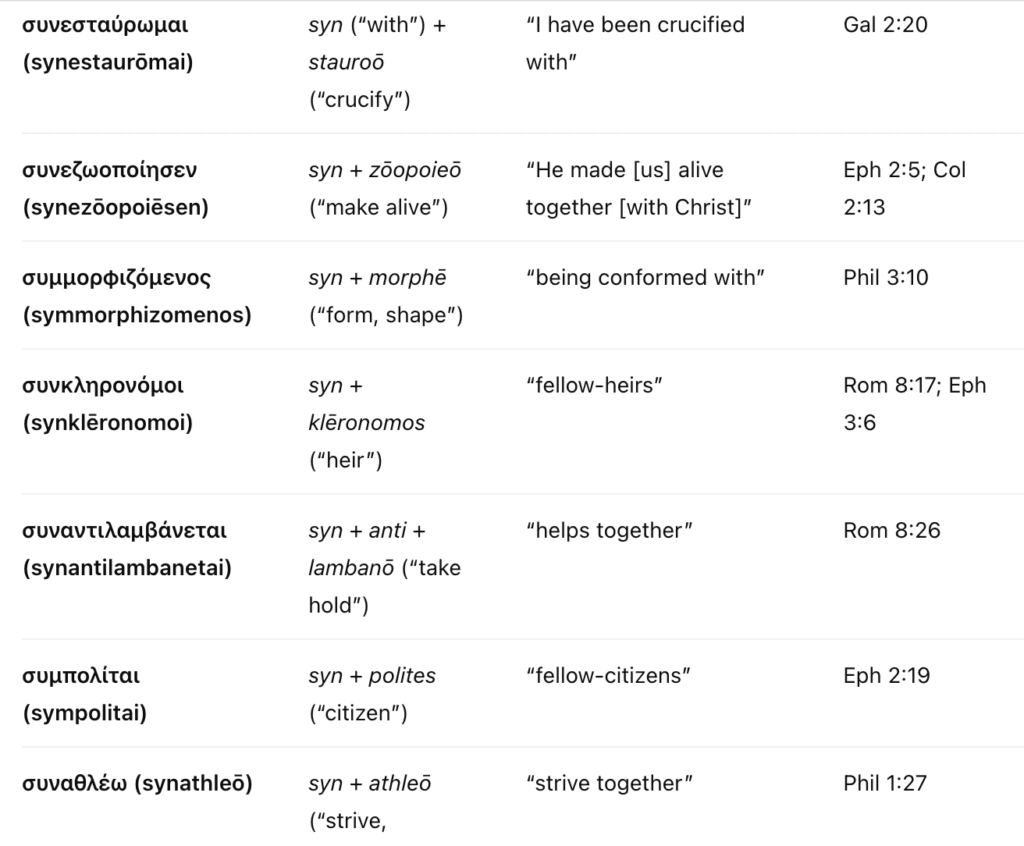
We do the same today, combining two words to make a new word:
- Vlog
- Laptop
- Hashtag
- Cybersecurity
- Earbuds
So now let’s get into the first claim, that this word somehow means economic exploitation. That is what Paul, the one speaking to Ally, claims.
The question that should be asked of him is where? Cite your sources if you are going to make a claim.
The closest possible place to see this anything other than homosexuality is, as Wes Huff points out is perhaps the Sybilline Oracles which were written as a collection of poems between 200 BC to AD 500. The passage spoken of was written in the first century AD (Book 2 Lines 70-77), perhaps even after Paul coined the term. The following is a translation of the text.
“Do not steal seeds. Whoever takes for himself is accursed to genrations of generations to the scattering of life. Do not arsenokoitein, do not betray information, do not murder. Give one who has labored his wage. Do not oppress a poor man. Take heed of your speech. Keep a secret matter in your heart. Make provision for orphans and widows and those in need. Do not be willing to act unjustly, and therefore do not give leave to one who is acting unjustly” JJ Collins translation of the Sibylline Oracles in the Old Testament Pseudopigrapha, by James H Charlesworth (New York: Doubleyday, 1983).
Wes Huff notes that it isn’t even clear that the word arsenokoitein is the actual word used in the text.
The reality is that we do not have the original text. We have later copies from the Byzantine era. Some of the lines in the Byzantine copies are uncertain. This was not uncommon in the Byzantine texts were there were errors, words added by scribes to explain, and editorial corrections. With the Bible there are tens of thousands of other manuscripts to make clear when there is a simple mistake made. But not so with the Sybillene oracle.
In this particular case, there is one manuscript that has the word arsenokoitein and another manuscript that does not. Even JJ Collins makes this claim.
“The reading ἀρσενοκοιτεῖν is uncertain and may be a Christian interpolation” (The Sibylline Oracles of Egyptian Judaism (1974). p. 16).
This would make sense on the basis that the word is very, very rare as it was originally coined by Paul based on the Septuigint text. It is like something that later Christians added to fit into a moral theology. Also the Sybillene Oracle is known for many of its interpolations (added words/texts)
The second problem is that this oracle is a list of moral wrongs. Arsenokoitein is found in the same context as not betraying a trust with information and not murdering. One would be hard pressed to say that “murder” was always about economic issues, and the same with betraying a trust. To say it is economic alone does not fit the sentence within which it is found.
A third problem is that if we are to establish this as an economic issue, we would expect to see it written in that context in at least one other place. We do not. This fuzzy and uncertain place in the Sybilline Oracle is the only place even remotely connected to anything economic, and that is highly unlikely. Throughout the early centuries, this word was clearly understood as same-sex male relationships.
-
Sibylline Oracles 2.73: condemns men lying with males (same-sex act).
-
Polycarp (disciple of the apostle John), Epistle to the Philippians 5.3: quotes Paul directly in a sexual-vice list.
-
John Chrysostom (4th c.) and Theophylact (11th c.) interpret it clearly as male-male sexual relations, not commerce.
The second item that the speaker brings up is that the word “homosexuality” did not appear until the 1860’s, and Ally adds that it was not put into the Bible until 1946.
While that may be true, it does not mean that it isn’t an appropriate translation of the text. Words change, and we use words to describe things. As homosexuality became a more popularized term for same sex relationships, it was only appropriate to add this as the description. It is much easier than writing out “sexual intercourse between two males” instead of the more common description of homosexuality.
So the case that this word arsenokoitein or its variant means economic exploitation just does not stand true. And while it is true that the word “homosexuality” was not found in Bibles later in history, it is still a fair and honest treatment of the text as words are used to describe things that are taking place.
Allie Beth Stuckey did a great job of handling this. And kudos to Wes Huff for searching for an even remote use of this word in history. But the summation is still the same: This argument does not stand.
But what about malikoi? The other Greek word which this debate with Ally says is also in Romans 1?